


M6 Junctions 36 to 40: the Lake District, the Yorkshire Dales and Shap
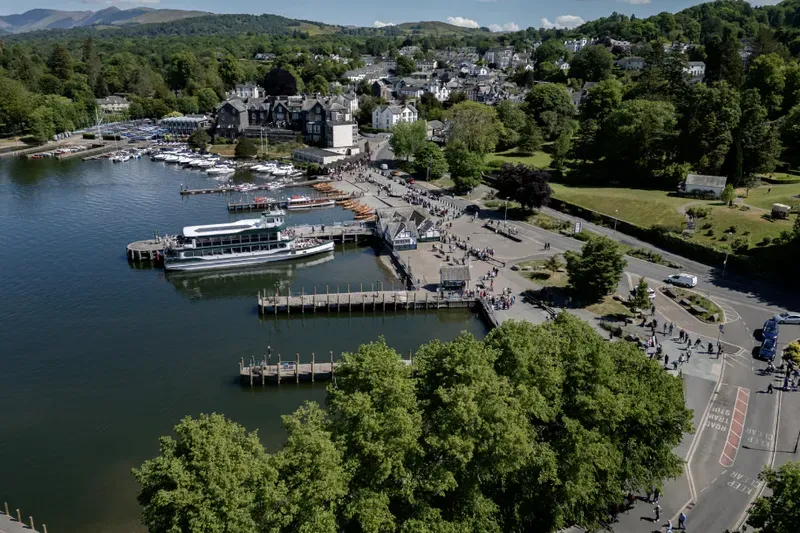
Between Junction 36 near Kendal and Junction 40 at Penrith, the M6 runs between two national parks: the Lake District to the west, and to the east the Yorkshire Dales, which was extended on 1 August 2016 to take in the northern Howgill Fells. For many drivers on this stretch, the motorway is the way in to a holiday rather than a road to somewhere else.
Junction 36 is the turn for the southern Lakes: the A590 for Kendal and Barrow, with the A591 on to Windermere and Ambleside, and the A65 east to Kirkby Lonsdale and Skipton. If you are heading for Windermere, this is your junction.
The junctions on this stretch
- Junction 36 — A590 for Kendal and Barrow (the A591 for Windermere), and the A65 for Kirkby Lonsdale and Skipton.
- Junction 37 — A684 for Kendal and Sedbergh, the western edge of the Yorkshire Dales.
- Junction 38 — A685 for Tebay and Brough, and the B6260 for Appleby.
- Junction 39 — A6 for Shap.
- Junction 40 — A66 for Penrith, Keswick and Workington, and east to Brough.
The Yorkshire Dales from Junction 37
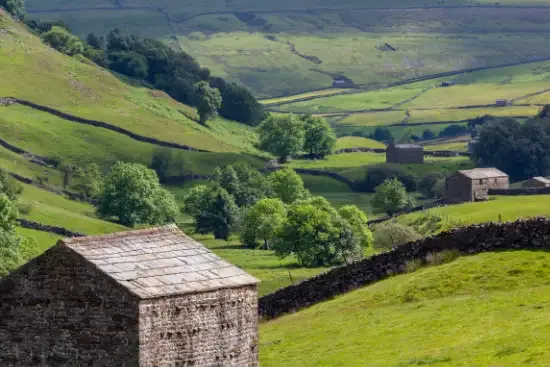
Junction 37 is the quiet one. The A684 runs east to Sedbergh, at the foot of the Howgill Fells, and on into the Dales. Since the 2016 extension the Howgills have been inside the Yorkshire Dales National Park. North of here the motorway runs through the Lune Gorge, on a split level above the railway, with the Howgills rising on the east side.
Shap: the highest point on the M6
North of Tebay the motorway climbs to its summit near Shap, 1,036 feet (316 metres) above sea level. When this section opened in 1970 it was the highest stretch of motorway in Britain — for just 58 days, until the M62 opened across the Pennines at 1,220 feet (372 metres). It is still the highest and most exposed part of the M6, where winter weather is most likely to cause problems. In winter it is worth checking the latest M6 traffic news before you set off over the top.
How busy is this stretch?
This is the quietest part of the M6. At its busiest, between Junctions 38 and 39, it carries barely more than a quarter of the traffic on the M6 at Junction 20, the busiest measured stretch on the road (187,521 vehicles a day). The Department for Transport’s 2025 counts:
| Stretch | Vehicles a day | Lorries a day | Lorry share | Length |
|---|---|---|---|---|
| J36 to J37 | 46,025 | 6,174 | 13.4% | 7.8 miles |
| J37 to J38 | 43,802 | 6,531 | 14.9% | 8.8 miles |
| J38 to J39 | 52,401 | 6,057 | 11.6% | 5.7 miles |
| J39 to J40 | 39,666 | 6,550 | 16.5% | 11.2 miles |
Two things stand out. The busiest point is Junctions 38 to 39, past Tebay, and the quietest is the long 11.2-mile run from Junction 39 to 40 over Shap — the quietest main-line stretch on this page. But the lorry numbers barely change from one stretch to the next, at around 6,000 to 6,500 a day, so over Shap, where the car traffic thins out, lorries make up one vehicle in six. North of Penrith, between Junctions 40 and 41, traffic jumps back up to 65,722 a day.
Places to stop
There are two service areas on this stretch, and they are unusual. Killington Lake, between Junctions 36 and 37, is on the southbound side only, beside the reservoir it is named after. Tebay, between Junctions 38 and 39, is run by the Westmorland family business rather than one of the national chains and is known for its farm shops, with a separate site on each side of the motorway. Heading north, the next stop after Tebay is Southwaite, between Junctions 41 and 42.
Traffic count figures on this page are from the Department for Transport road traffic statistics, 2025.